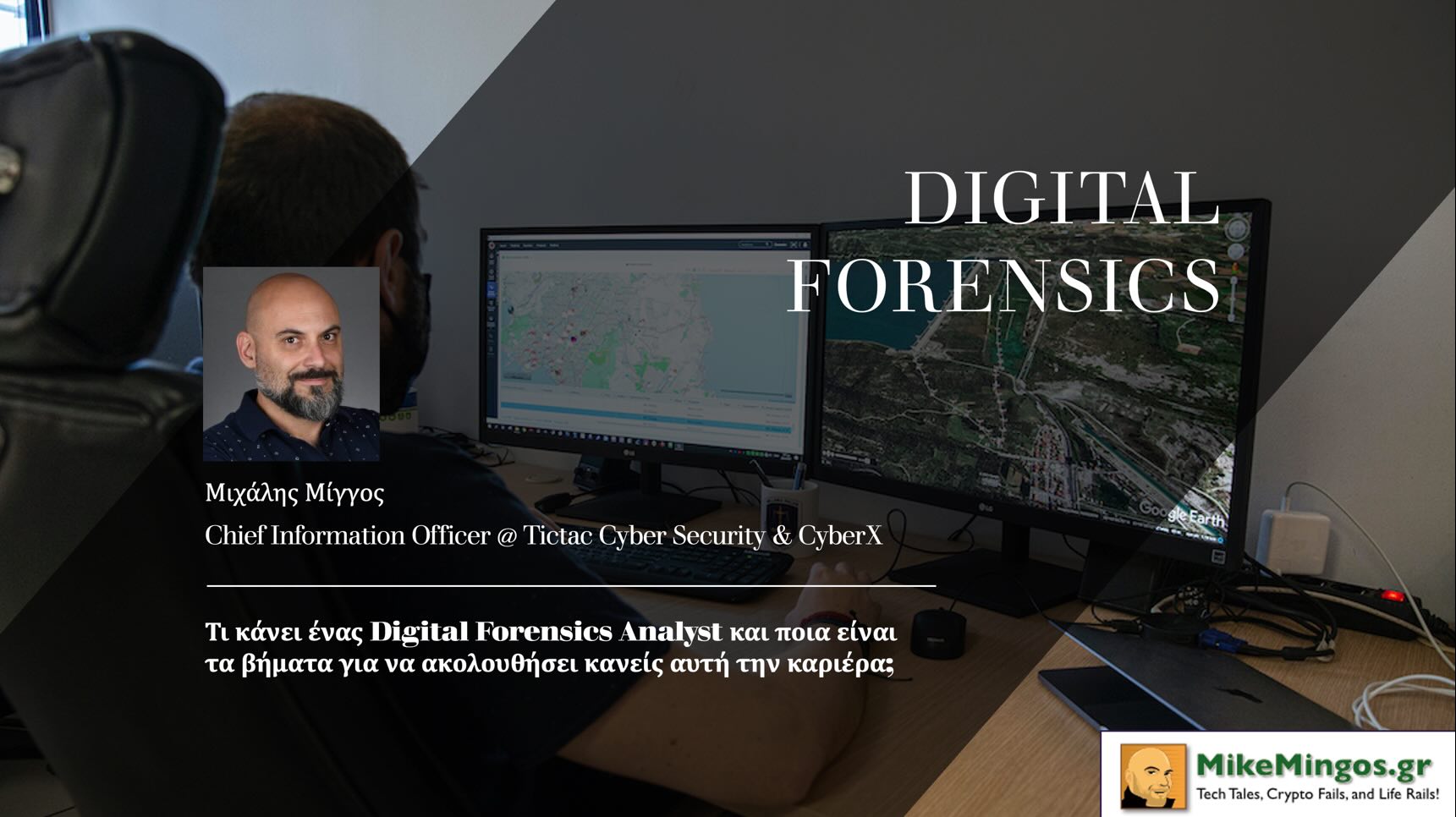
Digital Forensics: A Profession on the Front Lines of Cybersecurity
Cybersecurity is a constantly evolving field, and one of the most critical professions in this space is the Digital Forensic Analyst. In an era where digital crimes are rapidly increasing, businesses, governments, and legal authorities need specialists who can analyze cyberattacks, recover data, and ensure that attacks won’t be repeated.
As part of my presentation to students at Athens University of Economics and Business, we explored the Digital Forensic Analyst profession, the required skills, career prospects, and the tools used by professionals in this field.
Date: Thursday, February 6 - 18:00-20:00
What is Digital Forensics?
Digital forensics involves the analysis and investigation of data from electronic devices such as computers, mobile phones, servers, cloud infrastructure, and network devices. The Digital Forensic Analyst’s job is to collect, analyze, and present this data in a way that is valid and admissible in court proceedings or internal investigations.
A simple example: A company discovers that an employee stole and sold confidential data. How do you prove something like that? By using USB analysis tools, forensic imaging, and deleted file recovery.
Daily Challenges and Cases
A Digital Forensic Analyst is called upon to handle cases such as:
- Deleted data recovery from computers and mobile devices.
- Employee misconduct investigations, such as data leaks or security policy violations.
- Ransomware and malware analysis to identify how an attack occurred.
- USB and external storage device inspection for possible illegal file copying.
- Unauthorized access detection in corporate networks and systems.
How is the Analysis Conducted?
A forensic analyst follows specific steps:
- Evidence collection: Techniques and tools are used to ensure data is not altered.
- Forensic image creation: An exact copy of a system is created for analysis without affecting the original data.
- Data recovery and analysis: Deleted files, metadata, communications, and logs are examined.
- Report writing: Findings are documented and prepared for use by legal or administrative bodies.
What Tools Does a Digital Forensic Analyst Use?
Some of the most popular forensic tools include:
- Autopsy & Sleuth Kit: Open-source forensic suite for data analysis.
- Wireshark: Network traffic analysis.
- FTK Imager & EnCase: Forensic image creation and data recovery.
- Cellebrite UFED: Mobile device data analysis.
- Magnet Axiom: Data collection from computers, cloud, and mobile devices.
How to Enter the Digital Forensics Field?
To become a Digital Forensic Analyst, one typically follows one of these paths:
- Degree: Studies in Computer Science, Cybersecurity, or Computer Engineering.
- Specialized certifications: Certifications such as GIAC Certified Forensic Examiner (GCFE), Certified Computer Examiner (CCE), or EnCase Certified Examiner (EnCE).
- Hands-on experience: Participation in labs and practice with forensic tools.
Skills You Need
Beyond technical knowledge, a Digital Forensic Analyst also needs:
- Analytical thinking: To connect evidence and understand what happened.
- Attention to detail: A single piece of metadata can change the direction of an investigation.
- Time management: Most investigations have deadlines.
- Composure under pressure: Especially during cyberattack incidents.
Digital Forensics: A Career with Prospects
The demand for specialized forensic analysts is high, as digital crime continues to rise. Career opportunities include positions at cybersecurity firms, government agencies, large enterprises, and consulting companies.
If you’re interested in the combination of technology, investigation, and justice, then Digital Forensics could be an excellent career choice.
In my presentation at Athens University of Economics and Business, we examined practical examples and real cases, analyzing how digital forensics works in practice.
If you’d like to learn more, visit mikemingos.gr, where you’ll find articles, tips, and resources about the cybersecurity field!
Presentation
Presentation Link: https://www.slideshare.net/slideshow/digital-forensics-analyst/275403578