After 25 years in IT, and a good number of them in cybersecurity, I never expected to go on television to talk about freezers. And yet, on 4 November 2026 I joined “10 Pantou” on Greek channel OPEN, hosted by Nikos Stravelakis, for a topic that sounds like a joke until it happens to you: hackers who remotely raise the temperature of refrigerators and destroy entire food stocks.
The video starts at the point of the discussion (in Greek):
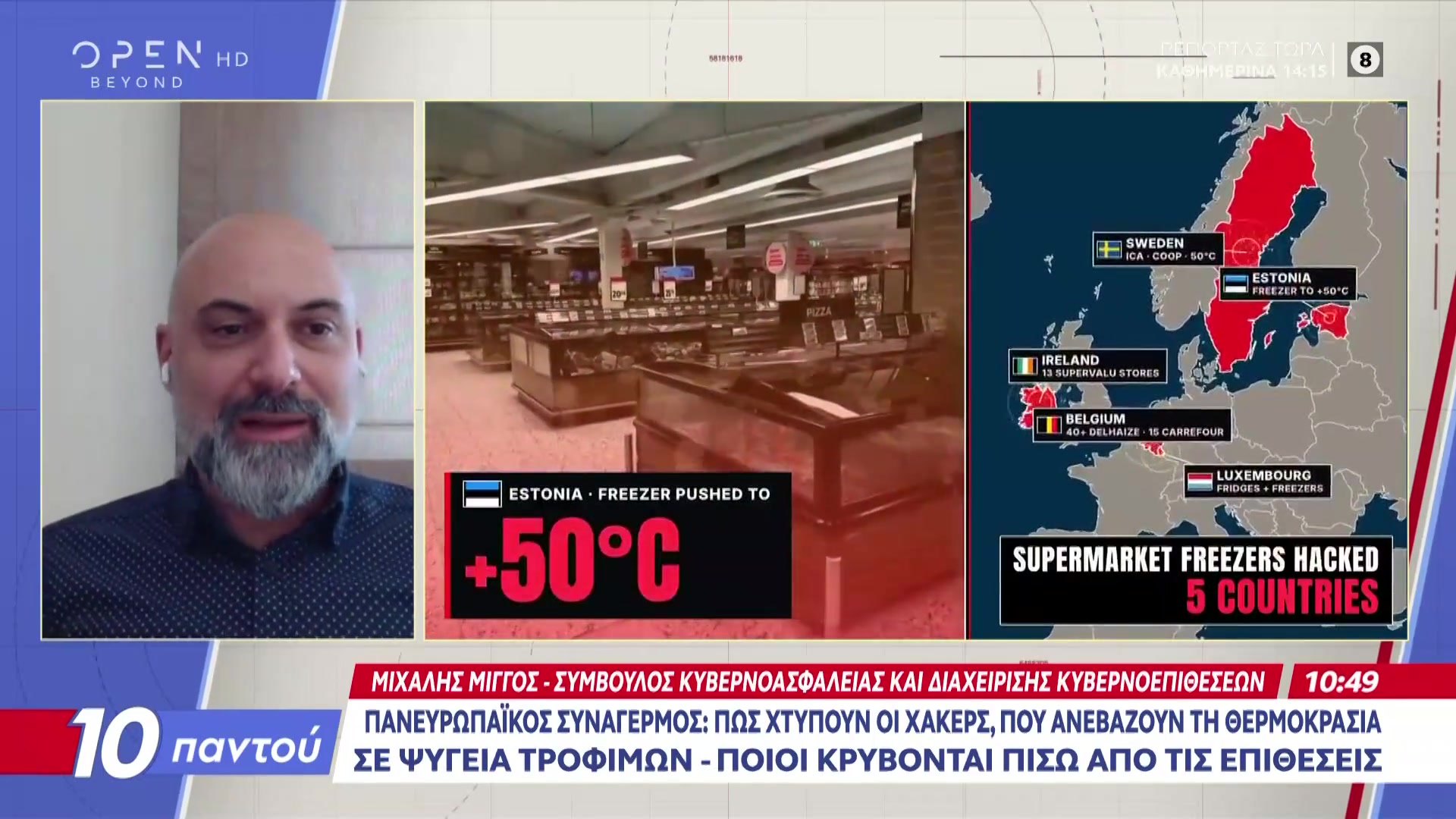
What happened in Europe and in Greece?
On the night of 1 to 2 November, supermarkets in at least seven European countries (Belgium, Estonia, Ireland, Finland, Luxembourg, the Netherlands, Sweden) found their fridges and freezers set as high as 50 degrees Celsius. Food in the bin, empty shelves. And it wasn’t the first time: a few weeks earlier, a similar wave had hit hundreds of supermarkets in France.
In Greece, the same week, a butcher shop in Kifissia, north of Athens, found its refrigeration set to 150 degrees, with staff locked out of the system. The technician needed about two hours to regain control and, fortunately, the products were saved. Similar reports followed from businesses in Crete.
And the most interesting part: Greece’s National Cybersecurity Authority had already identified, back in October, more than 300 commercial refrigeration systems in the country that were exposed to the internet. The warning was there. As usual, nobody listened until it became news.
Is your own freezer at risk?
That was the first question on the show, and the answer is simpler than you think.
If your freezer isn’t connected to the internet, it is not at risk from hackers at all. Full stop.
The problem starts when the device has a remote management system. In other words, a control panel that lets you see and change the temperature from your phone. And, as was said on the show, almost every butcher has one these days: they check from home that everything is fine.
Very convenient. Except that if you can get in from your home, potentially anyone else can too, from anywhere in the world.
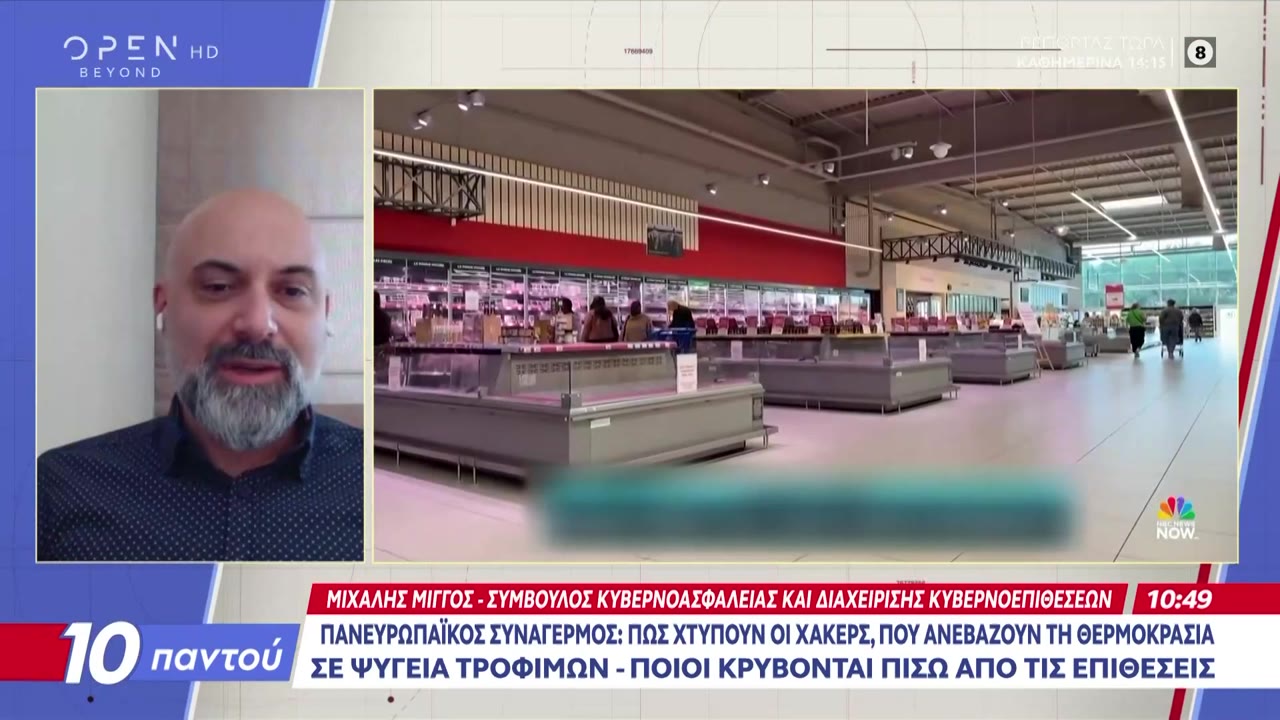
Forget the freezers. Think about your cameras
On the show I raised a question that concerns far more people than butchers: how easy is it for someone to get into the camera system you have at home?
The answer: very easy, if nobody took care of its security.
The freezer is just the most spectacular example of a whole category called IoT (Internet of Things, meaning “smart” devices connected to the internet). Security cameras, video doorbells, air conditioners, water heaters, alarm systems, smart TVs, even robot vacuums. The rule is one: anything “smart” has a door to the outside world. And every door needs a lock.
Why is it so easy?
Because in all these systems there are two different jobs, which people tend to see as one.
There is the person who installs it: the refrigeration technician, the camera installer, the electrician. They come, they set it up, they make sure it works and that you can see it on your phone. Their job is to make it work, not to make it secure.
And there are those of us in cybersecurity. A separate field, which many people think is just “IT guys”. We do a different job: we look at who else can get in, apart from you.
The result is well known: devices with the factory default password (the infamous admin/admin), open directly to the internet, without updates for years. Attackers don’t need to look for you. There are search engines that find devices like these all over the world within minutes.
Can it be secured? Of course
That was the closing point on the show, and it’s the most important one: yes, there is a way, and it’s neither difficult nor expensive. On air I had time for the two basics, a secure password and a firewall in front of the device. Here they are in more detail, the same for a freezer, a camera or anything “smart”:
- Change the default password. Today. With a strong, unique password for each device.
- Don’t leave the device directly exposed to the internet. Put a firewall in front of it, so that not just anyone can connect from their home.
- Remote access only through a VPN and with MFA (a password plus a second confirmation step on your phone).
- Software updates. And if the device no longer receives updates from the manufacturer, plan its replacement.
- Enable and test your alarms. In Crete, according to the technician who was called in, the attackers first disabled the alarms so nobody would be alerted.
- Ask your technician: “Who can connect to this, from where, and how do we know?” If there’s no answer, bring in someone who works in security.
This isn’t only about butcher shops. It’s about every business, small or large, and every home with a camera at the front door.
What’s the takeaway?
There’s no need to panic. As the butcher who joined us on the show put it: stay calm, but pay attention.
The technology that lets us check the freezer temperature from the sofa is wonderful. We just need to remember that every convenience for us can become a convenience for someone else, if we don’t lock the door.
Take a look around your home and your business today: how many devices are connected to the internet without you ever having thought about it?
For more on how big attacks start from small shortcuts, see also my talk at Acronis Day Athens 2026.
Sources on the incidents: Al Jazeera: Suspected cyberattacks trigger supermarket fridge failures across Europe · TO BHMA: How ready is Greece for the battle against hackers · SKAI: Hackers target commercial refrigerators in Greece
Did you like this article? Share it with someone who has “smart” devices without realising it. Your comments are always welcome!